Wellness
Five evidence-based techniques to reduce daily stress
Kuwait City's growing wellness culture is meeting a genuine mental health challenge — here's what the science actually says works.
4 min read
Updated 5 h ago
Wellness
Kuwait City's growing wellness culture is meeting a genuine mental health challenge — here's what the science actually says works.
4 min read
Updated 5 h ago
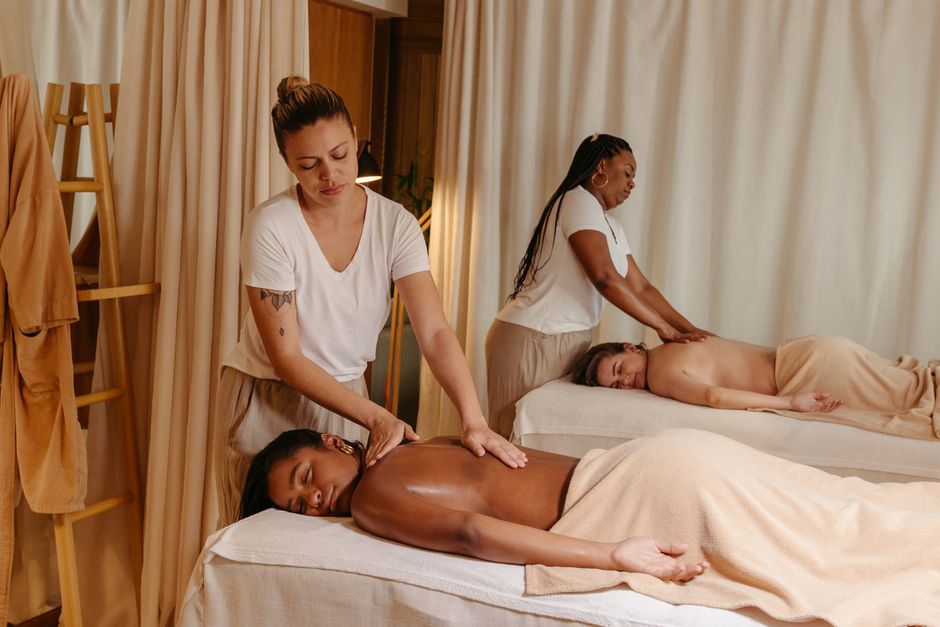
Stress is measurable, and the numbers from Kuwait are uncomfortable. A 2024 survey by the Arab Centre for Research and Policy Studies found that 68 percent of Gulf residents aged 25 to 44 reported moderate-to-high daily stress levels, with financial pressure and long working hours cited as the leading triggers. For Kuwait City's 2.5 million residents absorbing summer heat that routinely pushes past 47°C and commutes along the gridlocked Fahaheel Expressway, those numbers feel lived-in rather than abstract.
The timing matters. July marks the midpoint of a work calendar that offers few natural breaks before the cooler months return in October. Mental health practitioners across the city say this stretch — brutal heat, school holidays disrupting routine, and Ramadan still months away — is when stress complaints spike. Kuwait's Ministry of Health expanded its community mental health outreach program in January 2026, funding six new counselling hubs, but demand is outpacing supply. That gap is precisely why self-managed, evidence-based techniques matter more right now.
Box breathing is the first technique worth adopting and costs nothing. The method — inhale for four counts, hold four, exhale four, hold four — was developed for use in high-stress military environments and has since been validated in multiple peer-reviewed trials, including a 2023 study in the journal Frontiers in Psychology that showed a statistically significant reduction in cortisol levels after just five minutes of practice. Do it in a parked car before walking into the office on Al Soor Street. Do it in a bathroom stall. Location is irrelevant.
Second: progressive muscle relaxation, a technique dating to Edmund Jacobson's 1920s research that remains one of the most replicated anxiety interventions in clinical literature. The Kuwait Association for Mental Health, based in Salmiya, runs free monthly group sessions that teach the technique alongside guided body-scan exercises. Sessions are held every second Saturday and are open to non-members.
Third is deliberate physical movement — not necessarily a gym membership. Walking 22 minutes daily reduces anxiety scores by roughly 20 percent according to a meta-analysis published in JAMA Psychiatry in 2022. The shaded walking track inside Al Shaheed Park in central Kuwait City is fully covered and air-conditioned at the entrance pavilions, making it usable even in July. The park's 200,000-square-metre footprint gives enough distance for a meaningful loop.
Fourth: digital curfews. The American Psychological Association's 2025 Stress in the Digital Age report linked smartphone use after 9 p.m. to a 34 percent increase in reported sleep disturbance. Turning off notifications from work applications between 9 p.m. and 7 a.m. is not a radical move — several Kuwait-based employers, including Zain Telecom, have adopted internal policies encouraging it — but the individual has to enforce it personally.
Fifth, and most frequently underestimated: consistent sleep timing. Going to bed and waking at the same hour seven days a week regulates the circadian rhythm in ways that no supplement fully replicates. Researchers at Harvard Medical School tracked sleep consistency in 2023 and found that irregular sleepers had cortisol profiles resembling those of people sleeping two hours less per night than their consistent-schedule counterparts. Kuwait's late social culture makes this difficult, but even shifting a consistent window — say, 1 a.m. to 8 a.m., held firm — outperforms erratic schedules by a wide margin.
Practising these five techniques does not replace professional support when stress tips into clinical anxiety or depression. The Royale Hayat Hospital in Jabriya operates a dedicated psychiatry and behavioural health outpatient department, and initial consultations start at around 35 Kuwaiti dinars. The Ministry of Health's national mental health helpline, 94006744, is staffed around the clock and free to call. Build the daily habits, but know where the doors are if you need to walk through one.

Wellness

Wellness

Wellness

Wellness
About this article
Published by The Daily Kuwait City
Spread the word
Daily brief
Free, in your inbox before 7am. Weekdays.
The Daily Network — local news across Australia