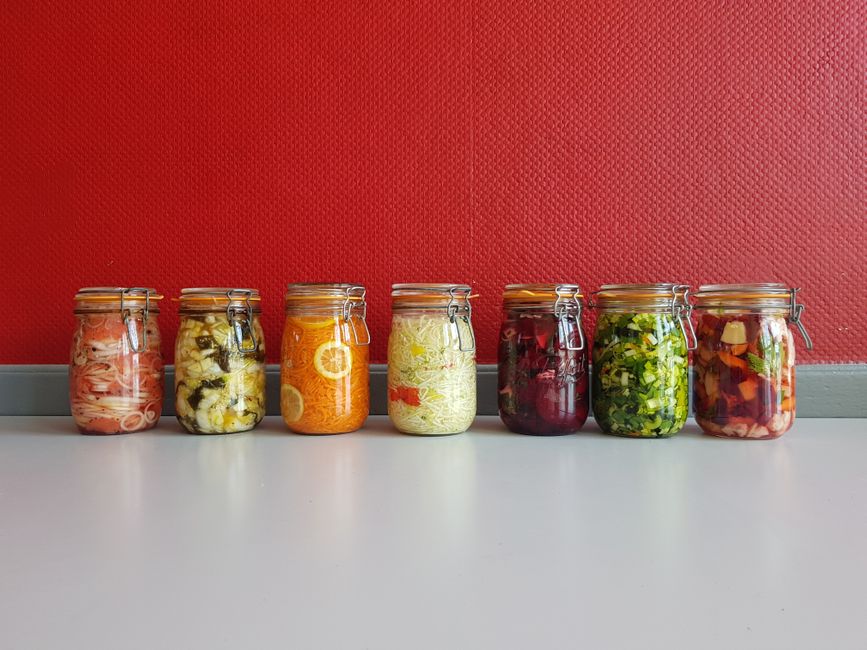
Gut health is no longer a fringe wellness topic. It has moved firmly into mainstream nutrition science, and Kuwait City's more health-conscious residents are starting to catch up, stocking fridges with products that their grandparents ate for entirely different reasons. The connection between the roughly 38 trillion microorganisms living in the human gut and outcomes ranging from mood regulation to immune function is now supported by hundreds of peer-reviewed studies — including a landmark 2021 Stanford University trial that found a high-fermented-food diet increased microbiome diversity in just 10 weeks, producing measurable reductions in 19 inflammatory proteins.
The timing matters. Kuwait's Ministry of Health reported in 2024 that more than 40 percent of Kuwaiti adults meet the clinical threshold for overweight or obesity — a figure that researchers increasingly link to disrupted gut flora, not just caloric excess. Add to that the region's high rates of antibiotic use, which strip the gut of beneficial bacteria, and the case for fermented foods stops being a wellness trend and starts looking more like a public-health priority. Gastroenterologists at the Kuwait Cancer Control Center on Al-Soor Street have begun incorporating dietary counselling that includes fermented food recommendations into patient aftercare plans, according to public communications from the center published earlier this year.
Where to Find the Good Stuff in Kuwait City
Start close to home. Souq Mubarakiya, the city's oldest market in the heart of Kuwait City, carries fresh labneh — a strained yogurt that concentrates live Lactobacillus cultures — sold by weight from several dairy stalls. Quality varies by vendor, so look for product that is made fresh on-site rather than pre-packaged. The target is live cultures, not shelf-stable imitations. Labneh drizzled with local olive oil and eaten with flatbread is one of the most microbiome-friendly breakfasts available at any price point in this city.
Sultan Center branches across the city, including the flagship store in Salmiya on Salem Al-Mubarak Street, stock a growing international fermented-food section. Shoppers will find Japanese miso paste priced at around 2.5 to 3.5 KD per 500-gram tub, Korean kimchi in 400-gram jars at roughly 2 KD, and Greek-style probiotic yogurt brands such as Mevgal and Chobani. Lulu Hypermarket in Rai also carries a dedicated refrigerated probiotic section that has expanded noticeably since late 2025, adding kefir — a fermented milk drink with a probiotic count that typically exceeds 12 billion CFU per 250ml serving — from both local and Turkish dairies.
Traditional Arabic cuisine already contains more fermented elements than many people realise. Turshi — pickled vegetables including turnip, cucumber and green chilli — served alongside grills at restaurants in the Qibla district is a fermented product, assuming it has not been preserved with vinegar shortcuts. Ask. Establishments that make it the slow way, brining vegetables in salt water for five or more days, are preserving live bacterial cultures. The shortcut vinegar version is not the same thing nutritionally.
How to Actually Build a Habit
Nutrition specialists at Burjeel Hospital Kuwait, located on the Fifth Ring Road in Shuwaikh, suggest starting with one serving of a fermented food daily rather than overhauling the entire diet at once. The gut microbiome responds to gradual changes more effectively than sudden large interventions. A tablespoon of miso stirred into soup, a small bowl of labneh at breakfast, or 200ml of kefir before lunch — none of these require dramatic lifestyle restructuring.
Homemade kefir is gaining traction in Rumaithiya and Bayan residential neighborhoods, where several informal WhatsApp groups trade kefir grains — the symbiotic cultures of bacteria and yeast used to ferment milk. Grains are typically shared free of charge between members, and a single tablespoon of grains can produce 500ml of kefir in 24 to 48 hours at room temperature, making it one of the cheapest probiotic options available. For anyone with lactose sensitivity, the fermentation process breaks down most of the lactose present in regular milk, though consulting a physician before changing dietary patterns significantly is always the sensible starting point.