Wellness
Kuwait City Council Launches Expanded Group Fitness Classes Guide
Kuwait City's government-backed fitness centres are offering more structured group classes than ever — here's what to know before you sign up.
4 min read
Wellness
Kuwait City's government-backed fitness centres are offering more structured group classes than ever — here's what to know before you sign up.
4 min read
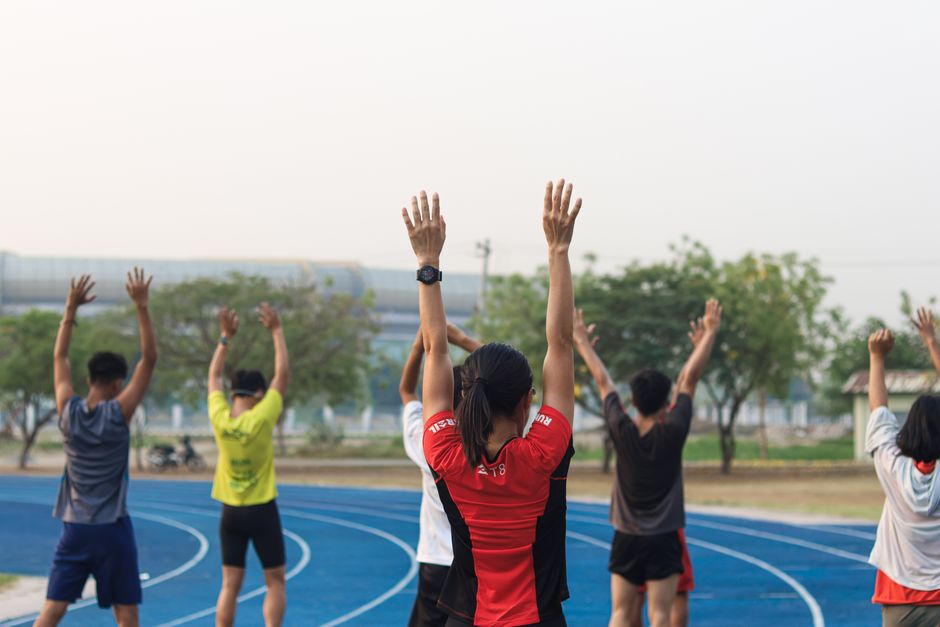
The Kuwait Ministry of Information and the Public Authority for Sport have expanded their jointly administered community fitness programme across at least seven municipally run sports halls this summer, with new group exercise timetables taking effect from 1 July 2026. The push marks the most significant expansion of publicly subsidised fitness programming the capital has seen in three years.
The timing is deliberate. July heat in Kuwait City — temperatures routinely breach 45°C by mid-morning — drives residents indoors, and the government has long recognised that air-conditioned public facilities absorb pressure that private gyms cannot. The Public Authority for Sport reports that membership enquiries at council facilities spike roughly 40 percent each summer compared to the cooler months of November through February. This year, administrators appear to have prepared for that surge rather than scrambling after it.
The Sabah Al-Salem Sports Complex on the southern edge of Hawalli Governorate is one of the flagship venues. Its weekly group schedule now runs six days, covering Zumba, core conditioning, aqua aerobics in its 25-metre indoor pool, and two dedicated yoga sessions on Wednesday and Saturday mornings starting at 7 a.m. Drop-in rates are set at 2 KWD per session, with a monthly unlimited pass priced at 15 KWD — considerably below what private studios in Salmiya charge, where comparable passes run between 35 and 60 KWD.
The Abdullah Al-Salem Cultural Centre in the Surra district, better known for its museum complex, has a less publicised sports annex that quietly runs mixed-gender aerobics and strength circuit classes three evenings a week. Capacity is capped at 20 participants per class, which means booking 48 hours ahead through the Public Authority for Sport's online portal is effectively mandatory during summer. The portal went live in its current form in March 2025 and has, by the authority's own figures, cut walk-up queueing at front desks by 60 percent.
Rumaithiya Sports Club, operated under the Kuwait Olympic Committee's community outreach arm, runs one of the most varied timetables in the city. Pilates on Sunday and Tuesday mornings, a beginners' martial arts conditioning class on Thursday evenings, and a Friday family fitness hour — children aged six and above admitted free with a paying adult — are among the current offerings. Rumaithiya is accessible from the Fourth Ring Road and has covered parking, which matters in July.
Researchers at the World Health Organization documented in their 2023 Global Status Report on Physical Activity that adults who exercise in group settings are 26 percent more likely to maintain a routine beyond three months than those who train alone. The social obligation — knowing a class starts at a fixed time, that an instructor and fellow participants expect you — functions as a commitment device that solo gym visits simply do not replicate.
Kuwait's own national health data, published by the Kuwait Institute for Scientific Research in late 2024, found that 56 percent of Kuwaiti adults reported doing less than 75 minutes of moderate physical activity per week — well below the WHO's recommended 150 minutes. Council-run classes are one of the few intervention points the government directly controls without requiring behavioural change that depends on individual purchasing decisions.
For anyone planning to use these facilities, a few practical points apply immediately. Registration at the Public Authority for Sport's online portal requires a civil identification number. Non-Kuwaiti residents need their residency permit number instead. Most venues open at 6 a.m. on weekdays and 7 a.m. on Fridays, and classes during Ramadan operate on adjusted schedules announced each year in the month prior. Personal health conditions, particularly cardiovascular concerns or joint injuries, should be discussed with a licensed physician at one of Kuwait City's polyclinics — such as the Jabriya Polyclinic on Block 12 — before beginning any new exercise programme. Instructors at council facilities are certified but are not medical practitioners.
This article was compiled by AI and screened before publishing. See our editorial standards.

Wellness

Wellness

Wellness

Wellness
About this article
Published by The Daily Kuwait City
Spread the word
Daily brief
Free, in your inbox before 7am. Weekdays.
The Daily Network — local news across Australia