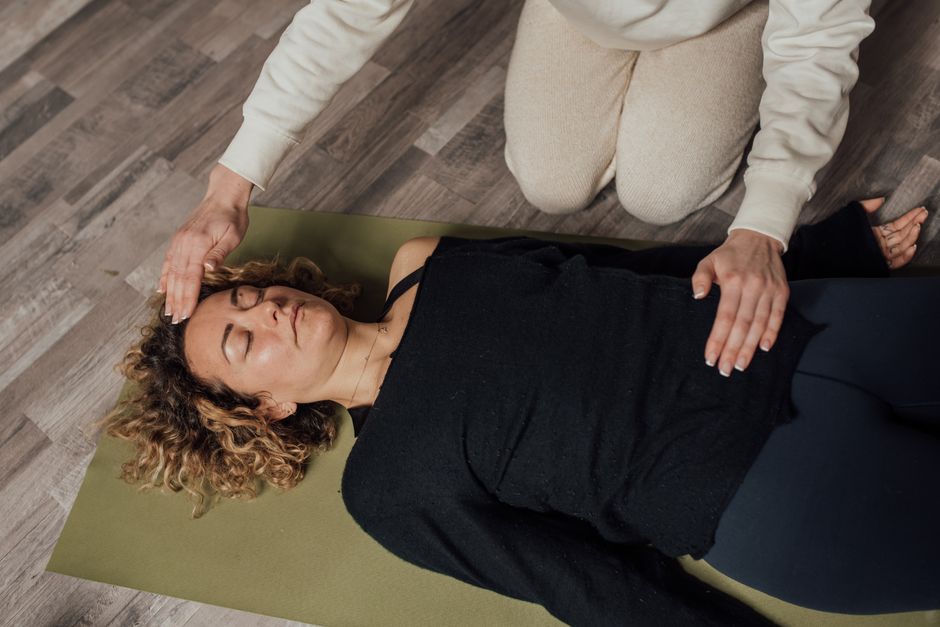
July in Kuwait City is brutal by any measure. Temperatures above 45°C outside, refrigerated offices cranked to 19°C inside, and a workday that for many professionals in the Salmiya financial district stretches well past iftar-era habits into a relentless nine-to-seven grind. The result: a stress epidemic that clinicians at Kuwait's Ministry of Health have flagged repeatedly since 2024. And the fix some practitioners are pushing hardest costs nothing and takes under four minutes.
Breathwork — the deliberate manipulation of breathing rhythm and depth to shift the nervous system out of fight-or-flight — has moved from the fringes of the wellness world into mainstream practice. A 2023 clinical trial published in Cell Reports Medicine found that five minutes of cyclic sighing, one specific breathwork pattern, reduced self-reported anxiety and improved mood more effectively than five minutes of mindfulness meditation across 114 participants. That data has been circulating among wellness instructors across the Gulf for the past year, and Kuwait City's practitioners have taken note.
Where Kuwait City practitioners are teaching this
The Evolve Wellness Centre on Gulf Road in Salmiya has incorporated structured breathwork modules into its Friday morning group sessions since January 2026. The centre's eight-week Stress Reset programme, priced at 85 Kuwaiti dinars, dedicates two of its eight sessions entirely to pranayama-style techniques adapted for office workers. The Shakti Yoga Studio in Rumaithiya, operating out of a converted villa near the Sultan Centre on Fourth Ring Road, runs a standalone breathwork evening every other Tuesday for 12 KD per drop-in session.
Both venues report that enrolment from corporate clients — particularly professionals working in the banking and oil sectors — has climbed noticeably through the first half of 2026. The logic is straightforward: unlike a 45-minute yoga class, breathwork can be practised silently at a desk in Al Hamra Tower or in a parked car in the Avenues Mall carpark between meetings.
The techniques that actually work under pressure
Practitioners at both venues emphasise three techniques above all others for acute, mid-day stress. The first is box breathing, already standard in military and emergency-medicine training: inhale for four counts, hold for four, exhale for four, hold for four. Two minutes of this activates the parasympathetic nervous system reliably enough that the US Navy SEALs have used it in pre-mission protocols for over two decades.
The second is the physiological sigh — a double inhale through the nose followed by a long, slow exhale through the mouth. Stanford neuroscientist Andrew Huberman's lab identified this pattern as the fastest single action a person can take to reduce physiological arousal. It works in under 30 seconds. The third technique, 4-7-8 breathing, developed by Dr Andrew Weil, extends the exhale to roughly twice the length of the inhale, which directly slows heart rate via the vagus nerve. One cycle: inhale four counts, hold seven, exhale eight.
For anyone whose stress has a hormonal or chronic component — and research increasingly shows that Gulf-region urban professionals carry unusually high cortisol loads tied to late-night social schedules, disrupted sleep, and heat-stress — breathwork alone may not be sufficient. The Kuwait Association for Mental Health, which operates out of offices in the Jabriya medical district, offers structured referral pathways to clinical psychologists for anyone whose anxiety persists beyond situational triggers. A first consultation at a private psychology clinic in Kuwait City typically runs between 30 and 50 KD.
The practical entry point is simple. Start with box breathing tomorrow morning before checking a single notification — ideally before entering the office, sitting in a parked car or in a quiet corner of a building lobby. Four cycles, under two minutes. The Evolve Wellness Centre's next Stress Reset cohort begins 12 July 2026; registration is open through their Gulf Road reception. For those who want to go deeper without a formal course, the Breathing Space app, available in Arabic and English, offers free guided sessions timed between three and ten minutes and works without a data connection — useful in basement carparks across Salmiya where the signal consistently drops. Consulting a physician or licensed mental health professional before beginning any structured programme remains the advised first step, particularly for anyone managing cardiovascular conditions.