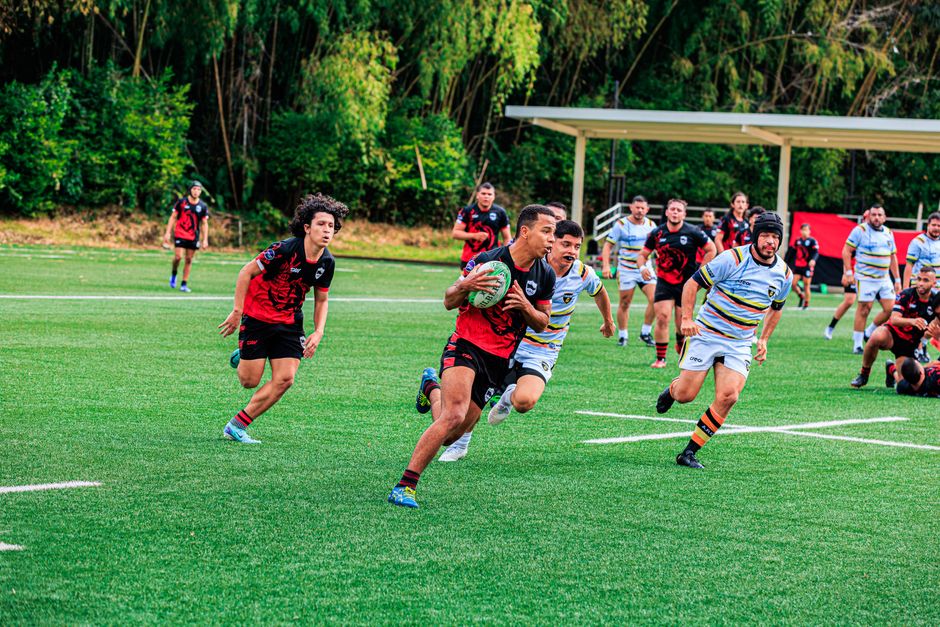
Membership registrations at community sport clubs in Kuwait City climbed 34 percent in the first half of 2026 compared to the same period last year, according to figures compiled by the Kuwait Amateur Sports Federation released this week. The jump represents tens of thousands of new participants across disciplines ranging from five-a-side football to open-water swimming — and it is the largest recorded single-year increase since the federation began systematic tracking in 2018.
The timing matters. Kuwait's Vision 2035 development agenda has placed public health and active lifestyles at the centre of its social policy goals, and sport ministry officials have spent the past 18 months pushing clubs to lower entry barriers and extend programming into the summer months, when scorching Gulf temperatures historically drove people indoors. The data now arriving suggests those efforts are producing measurable results, even as a brutal heatwave cancels outdoor events in cities like Washington D.C. and Philadelphia. Kuwait's indoor infrastructure, long considered underutilised, appears to be coming into its own.
Where Kuwatis Are Actually Showing Up
The biggest gains are concentrated in a handful of identifiable venues. The Shaab Leisure Park complex in the Rumaithiya district registered a 41 percent increase in structured programme enrolments between January and June, driven largely by a new padel tennis expansion that added six courts in February. Padel, which had barely existed in Kuwait a decade ago, now accounts for roughly 18 percent of all new club memberships city-wide — a number that surprised even federation administrators who track the sport closely.
Meanwhile, the Kuwait Yacht Club in Salmiya has reported a 28 percent spike in junior sailing enrolments, with its Saturday morning programmes now running at full capacity through August. The club introduced a KD 15 per session subsidised rate for under-18 participants in January, down from KD 25, and demand almost immediately outpaced available instructors. The club is currently recruiting three additional certified coaches to meet the shortfall before the autumn season opens in September.
Basketball leagues operating out of the Mishref Sports Complex have also recorded a surge, with 14 new recreational teams registering for the summer mixed-gender league that began in late June. The complex, which sits off the Fourth Ring Road, has extended its air-conditioned indoor hall availability to 11 p.m. on weekdays to accommodate working adults — a practical concession that club administrators say has been pivotal to retaining older demographics who cannot train in the afternoon heat.
What the Numbers Actually Reveal About Fitness Culture
The data points to something more interesting than a simple post-pandemic bounce. Participation is broadening across age groups. The 35-to-55 demographic, historically underrepresented in club sport, now accounts for 22 percent of new registrations in 2026 — up from 14 percent in 2023. Women represent 39 percent of all new participants this year, a proportion that would have been unthinkable ten years ago and reflects a genuine cultural shift rather than any single policy intervention.
Sport economists who study Gulf states have noted that Kuwait's relatively compact urban geography, with most of its population concentrated between the Arabian Gulf coast and the Sixth Ring Road, makes it unusually well-suited for community club networks. Residents in Salmiya, Rumaithiya, and Mishref can reach multiple facilities within 15 minutes, a logistical advantage that cities three times Kuwait's size cannot replicate.
The federation plans to publish quarterly participation reports starting in October, giving clubs real-time benchmarking data for the first time. For residents thinking about joining a programme, the practical advice is simple: move now. Several popular clubs, including those at Shaab Leisure Park and Mishref Sports Complex, are already reporting waiting lists for their September intake. Registration windows for autumn programmes are expected to open by late July, and the subsidised junior rates at facilities like the Kuwait Yacht Club are subject to annual budget review — meaning the KD 15 entry price may not survive into 2027.